ServicesFrame Straightening
Frame Straightening in Selma
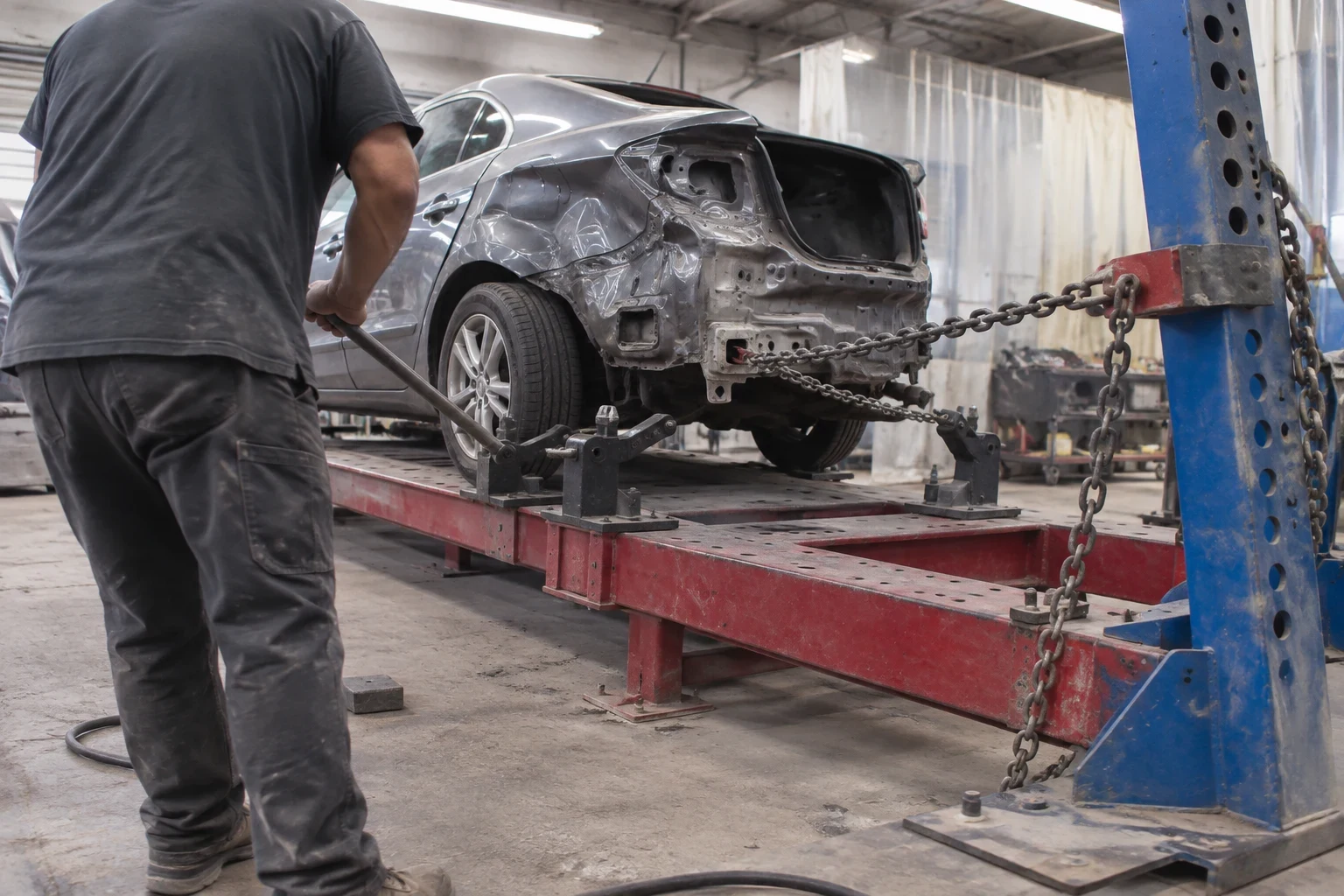
After a hard hit, the structure under the panels can shift by fractions of an inch. We measure your vehicle against its factory dimensions, pull it back into line on a frame rack, and check in once you are driving it again.
What frame straightening fixes
Most cars on the road today are unibody: the floor, rails and pillars form one welded shell instead of sitting on a separate frame. Trucks and many SUVs still use a body-on-frame design. Either way, a collision can push mounting points out of position, and everything bolted to them follows. Suspension, doors, the hood and even the sensors behind the bumper depend on those points being where the factory put them.
Frame straightening is the part of collision repair that restores that geometry. It is the right call when the damage reaches past the outer panels, which is common after a front or rear impact at highway speed, a curb strike, or a slide into a ditch. When a rail has been crushed or kinked past what steel can safely be pulled back from, we tell you plainly and replace that section instead.
What the work includes
Structural measuring
We measure control points across the underbody and compare them with the manufacturer's published dimensions. You see where the vehicle sits now and where it needs to be, before any pulling starts.
Controlled pulls on a frame rack
Your car is anchored at its pinch welds or frame, and we pull in stages, measuring between each one. Slow, repeated pulls let the metal move back without tearing or overstretching.
Section repair or replacement
Some high-strength steels should not be heated or pulled beyond a set limit. Where the maker calls for it, we cut out the damaged section and fit a new one following their repair procedure.
Corrosion protection
Welds and bare metal on the underside get sealer and corrosion protection so the repaired area holds up as well as the original.
Refinishing what was disturbed
If the straightening touches painted areas, we refinish them to match. Our lifetime warranty on all paint work covers that finish.
Signs your vehicle's frame may be out of line
- Gaps that no longer match
- Look along the hood, doors and trunk lid. If the gap is wide on one side and tight on the other, the structure behind it has likely moved.
- Doors that bind or will not latch
- A door that needs a shove to close, or that rubs at the top corner, often points to a shifted pillar or sill.
- The car pulls or the wheel sits crooked
- If an alignment shop cannot get your car to track straight, a bent suspension mount may be the reason. Alignment alone cannot correct that.
- Uneven tire wear since the crash
- One tire wearing on its inside edge within a few thousand miles is a clue worth checking.
- Warning lights for driver aids
- Lane-keeping or blind-spot alerts that act up after a collision can mean a sensor mount is no longer square to the road.
How the repair runs
- 1
Inspection and estimate
You bring your car to our shop and we look underneath, not just at the panels. The estimate lists the measurements, the parts and the labor, line by line.
- 2
Measure, pull, measure again
With the vehicle on the rack, we work through the pulls until every control point is back within factory tolerance. We note the final readings for your records.
- 3
Reassembly and checks
Suspension parts, panels and trim go back on, and we check gaps, door closing and how the car tracks. If your vehicle has cameras or radar behind the bumper or windshield, we tell you whether recalibration is needed.
- 4
Handover and follow-up
At pickup, we go over the finished repair with you, show you the final readings and point out the few things worth keeping an eye on. A few weeks later we check back to ask how it drives, because a slight pull or a new noise is easier to sort out early.
What affects the cost of frame straightening
Two cars with similar dents can need very different structural work, so we price from the measurements, not the outside appearance. The written estimate shows each step and part. If we find more damage once panels come off, we call you before going further.
- How far the structure moved
- A few millimeters at one corner takes fewer pulls and less rack time than a rail pushed back several inches.
- Unibody or full frame
- Unibody repairs often involve more sectioning and welding, while body-on-frame trucks may need heavier pulls on the frame itself.
- Steel type and maker procedures
- Ultra-high-strength steels frequently must be replaced rather than straightened, which adds parts and labor.
- Related parts and refinishing
- Bent suspension mounts, sensor brackets, and the paint work around repaired areas all add to the total.
Frame straightening questions
- Is a car with frame damage ever the same again?
- When the structure is measured back to factory dimensions and damaged sections are repaired or replaced to the maker's procedure, it should drive and protect you as designed. The key is measuring, not eyeballing. We keep the final readings so you can see the result.
- Will frame damage mean my car is totaled?
- Not necessarily. That decision belongs to your insurance company and depends on repair cost compared with the car's value. Many vehicles with frame damage are repaired. Our Insurance Claims page explains how we work with your insurer on the estimate.
- How many days does a frame repair usually take?
- That comes down to the amount of measuring and pulling involved, whether any sections need replacing, and how soon the parts show up. We give you a realistic timeline along with the estimate. If something changes partway through, we call and tell you.
- Do I need a wheel alignment too?
- Yes, a wheel alignment should follow any structural repair. Straightening puts the mounting points back in place, and the alignment sets the wheels to them.
- What should I watch for once I have my car back?
- Pay attention to whether it tracks straight, whether the steering wheel sits centered, and whether doors close the way they did before the crash. Glance at tire wear in a month or so. If anything feels off, let us know and we will look at it.
Find out what is happening under the panels
Bring your car to our shop in Selma and we will measure the structure and explain what it needs. Drivers from Fowler, Kingsburg and Sanger make the trip too.