Are Car Dents Worth Fixing? A Selma Body Shop's Honest Answer
Some dents are only cosmetic and some quietly lead to rust, so it helps to know which one you are looking at before you decide.
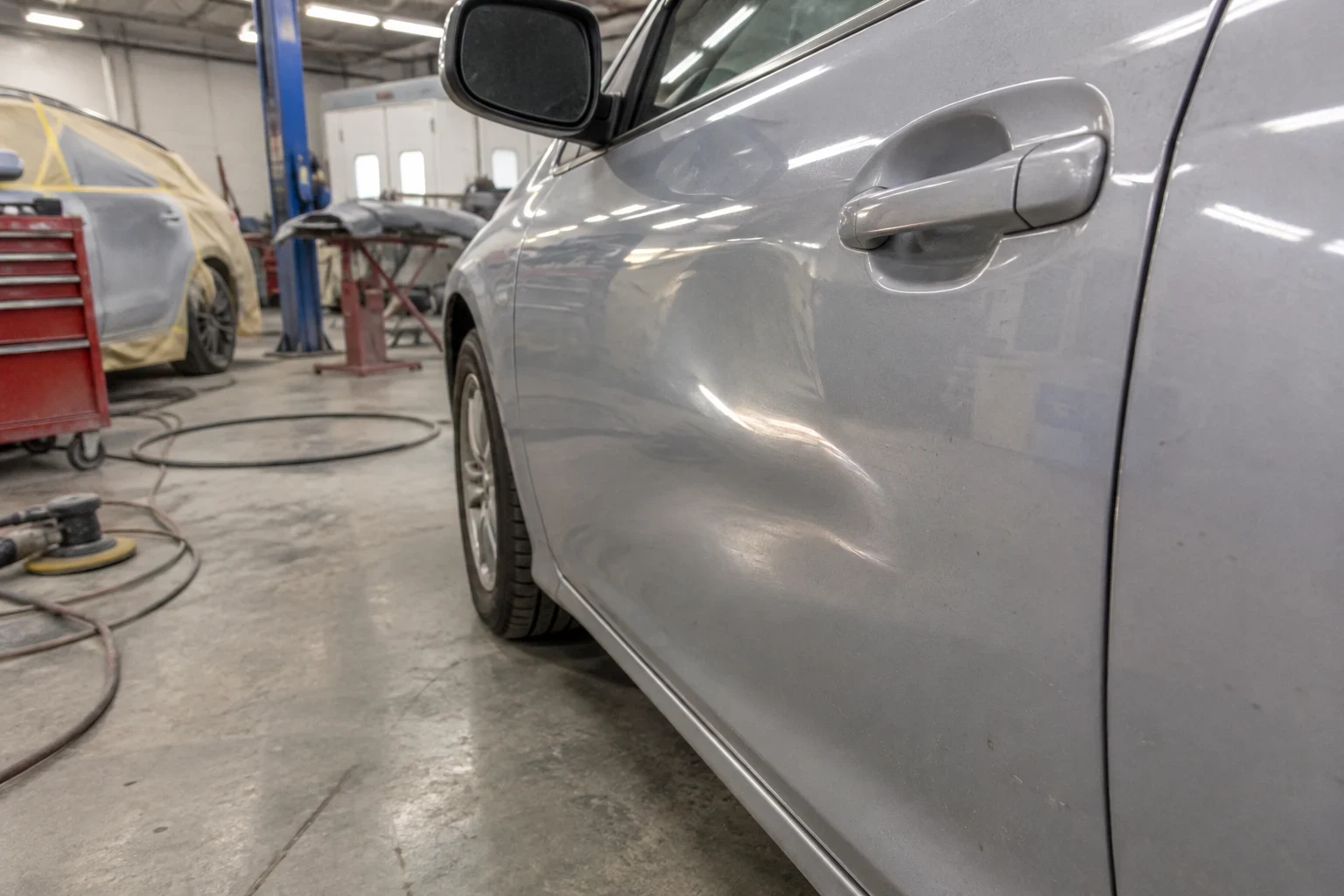
Are car dents worth fixing?
Most car dents are worth fixing, especially when the paint is cracked or chipped, the dent sits on a body line, or you plan to sell or trade in the car. A small, shallow ding with unbroken paint can usually wait. Once paint breaks, moisture reaches bare metal, and a cosmetic problem becomes a rust problem.
Is it normal to get dents on your car?
Yes. Almost every car picks up a few over the years. Door dings in parking lots, a stray shopping cart, a low post while backing up, and gravel thrown from a truck ahead are the usual causes.
A dent on its own is not a sign that anything is wrong with your vehicle. What matters is where it is, how deep it goes, and whether the paint over it is still intact. Those three things decide whether the repair is worth doing now, later, or at all.
Which dents should be fixed soon, and which can wait?
Look closely at the paint first. Run a fingertip around the edge of the dent and check for hairline cracks, chips or flaking clear coat. If the paint is whole and the dent is shallow, you have time to think it over.
A cracked finish changes the picture. Bare steel starts to oxidize quickly, and long, hot Central Valley summers bake the surrounding clear coat so the damage tends to spread outward rather than stay put. Fixing it early keeps the repair small.
- Fix soon: cracked or chipped paint, dents on a door edge or wheel arch, and anything near a seam where water collects.
- Fix soon: dents on a body line or crease, since they tend to stretch the metal and are harder to correct later.
- Can usually wait: small, round, shallow dings on a flat panel with no paint damage.
- Have it checked: any dent from an impact hard enough that a door, hood or trunk no longer closes the way it did.
What dents cannot be removed without repainting?
Very few dents are truly unfixable, but not every dent can be pushed out without touching the paint. Paintless dent repair works by massaging the metal back from behind the panel, and it needs flexible, unbroken paint and metal that has not been stretched too far.
When a dent is sharp, deeply creased, sits right on a panel edge, or the paint has already cracked, the better repair is conventional bodywork. We work the metal back as close to its original shape as we can, use a thin layer of filler only where needed, then prime, color-match and clear coat the panel. Aluminum hoods and fenders also behave differently from steel and can limit the paintless option.
If a panel is torn or badly kinked, replacing it can give a cleaner result than repairing it. We will tell you plainly which route makes sense and why, and show you what we see on your car.
What moves the cost of dent repair?
There is no single price for a dent, because two dents of the same size can need very different work. The estimate depends on what the repair actually involves once we have looked at the panel.
- Size and depth of the dent, and whether the metal is stretched or creased.
- Location: body lines, panel edges and roof rails take more time than the middle of a door.
- Access behind the panel, which may mean removing trim, lights or interior panels.
- Paint condition, and whether refinishing is needed at all.
- Your color: metallic and tri-coat finishes take more care to blend so the repaired panel matches its neighbors.
- Panel material, since aluminum is handled differently from steel.
Should you pay yourself or go through insurance?
For a small dent, many drivers pay out of pocket. Start with your deductible: if the repair is close to or under it, a claim may not be worth filing. A claim also goes on your record, so it is worth weighing against what the repair involves.
When the damage is larger, involves another driver, or touches more than one panel, an insurance claim usually makes sense. Give your insurer the plain facts of what happened, when and where. Do not guess about fault, speculate about injuries, or describe damage you have not had inspected. Let the inspection speak to that.
We can explain how the claims process works and send the details of the repair to your insurer, though the adjuster makes the coverage decisions. Our insurance claims page covers this in more detail.
What happens after the dent is fixed?
The repair is not quite finished when you drive away. If the panel was refinished, fresh paint keeps curing for a while, so we explain how to wash it, when it is safe to wax, and what to avoid in the meantime.
We also check back with you after the job to ask how the panel looks and whether anything has changed. If something does not look right in different light, we want to see it.
More questions about car dents
When is a dent repair not worth it?
If the car is near the end of its life and the dent is purely cosmetic with intact paint, living with it can be reasonable. If the damage reaches the frame or structure, though, it needs attention regardless of the car's age, and our frame straightening page explains why.
Do dents lower trade-in value?
Usually, yes. Buyers and dealers notice body damage quickly, and a dent with broken paint suggests possible rust underneath, which tends to pull the offer down more than the dent itself.
Can I wash my car right after a dent repair?
After paintless dent repair, yes. After a panel has been repainted, hand washing with mild soap is best for the first stretch, and we will tell you when it is ready for wax or a car wash.
Can a small dent turn into a bigger problem?
The metal itself rarely gets worse, but cracked paint lets moisture in, and rust can spread under the finish. That is the main reason to have a chipped dent looked at sooner rather than later.
Not sure about the dent on your car?
Call and describe the dent, where it is and what the paint looks like. We will talk through whether it can wait, what kind of repair it likely needs, and how to bring your vehicle in so we can give you a proper estimate.